Missed Microsoft sovereignty day? The answers decision makers need
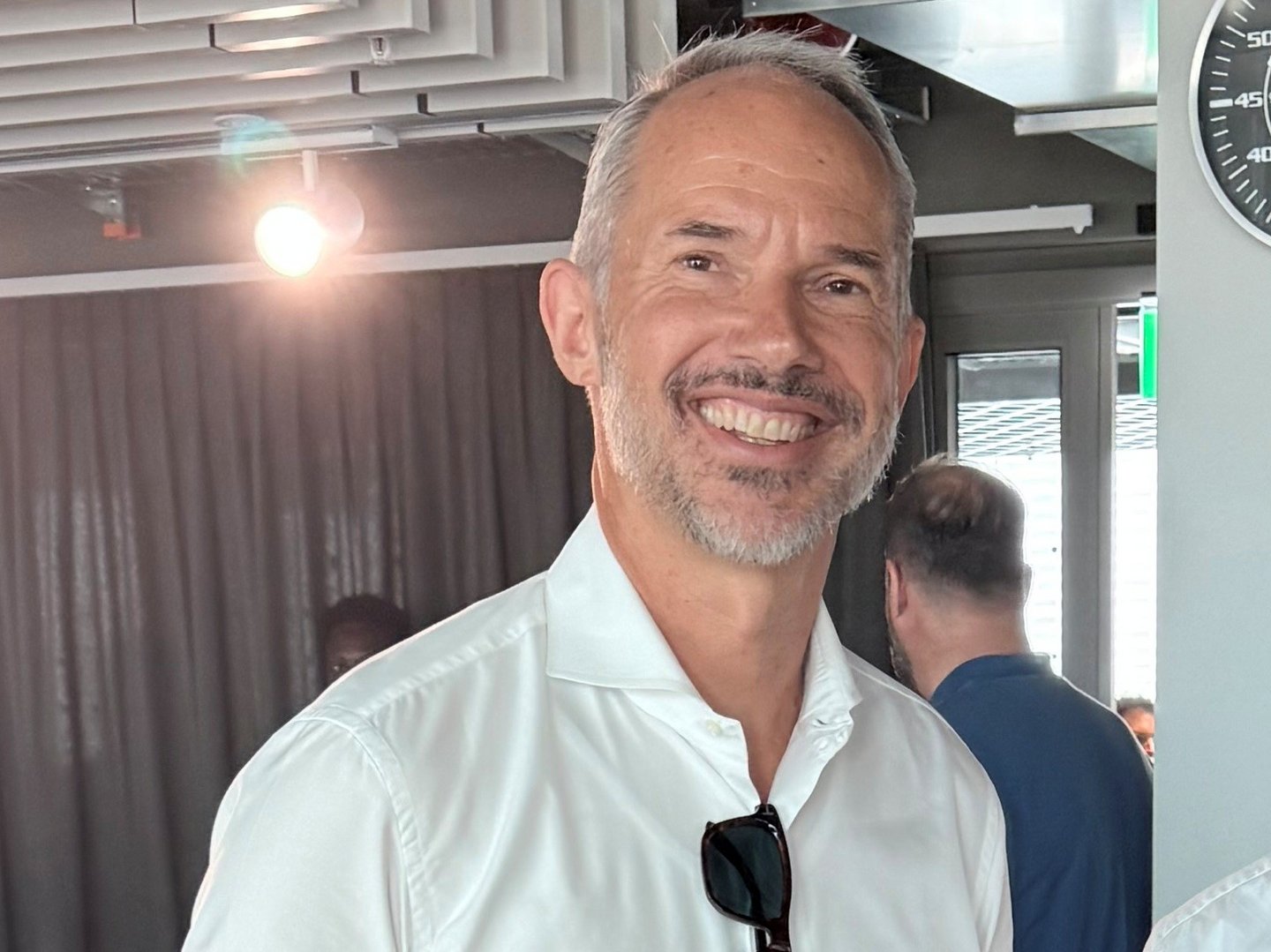
Chris Keller is CRO at Green and has spent years helping organizations navigate the challenges of cloud adoption and digital sovereignty, including his time at a leading hyperscaler.

If access to a platform is restricted business operations can be disrupted overnight. That is a business risk. Digital sovereignty means taking control of that risk rather than leaving it to chance.
Digital sovereignty. Isn't that mostly a political buzzword?
Chris Keller: I hear that quite often, but it simply isn't true. In conversations with customers, the discussion quickly becomes very practical. It comes down to where data resides, who has access to it, how AI can be used securely, and what it costs to operate. If access to a platform is restricted or a foreign authority demands access to data, business operations can be disrupted overnight. That is a business risk. Digital sovereignty means taking control of that risk rather than leaving it to chance.
Why are organizations turning to Green?
Chris Keller: Because Green addresses a challenge that many organizations are facing today. They want to benefit from Microsoft's cloud technologies while maintaining greater control over sensitive data and business critical applications.
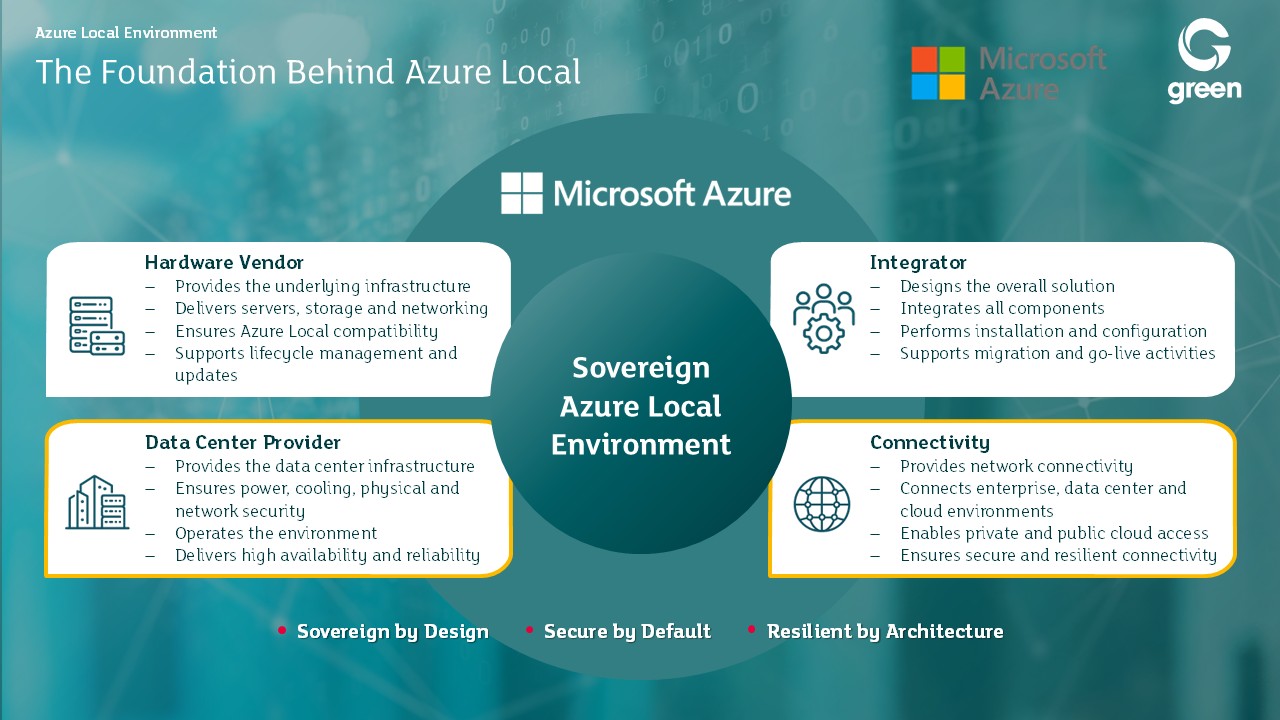
As Microsoft's preferred datacenter partner in Switzerland, Green provides the highly available datacenter and connectivity infrastructure that enables Azure Local. This allows customers to leverage Microsoft's innovation without compromising on digital sovereignty, availability, or local data residency.
The real value lies in the combination. Microsoft provides the platform, Green delivers the infrastructure, and our partner ecosystem ensures successful implementation.
Why are organizations reaching the limits of either an on premises server room or a cloud only approach?
Chris Keller: Many organizations find themselves caught between two worlds. The public cloud offers innovation and virtually unlimited scalability, but it does not always provide the level of control they require over data and infrastructure. An on premises server room offers independence, but it also comes with significant capital investment, limited scalability, and considerable operational complexity.
Azure Local at Green brings together the best of both worlds. Organizations can continue using the Azure platform they already know, running on highly available infrastructure in Swiss datacenters with redundant connectivity and state of the art datacenter infrastructure. Their data remains in Switzerland while benefiting from an environment designed for maximum availability.
Redundant power, cooling, and network connectivity provide the foundation for strong business continuity. At the same time, organizations gain an infrastructure that grows with their business and scales as their requirements evolve.
Together with Microsoft and experienced integration partners such as ti&m, Green provides a strong ecosystem that enables organizations to adopt a future ready platform without the complexity of building and operating that infrastructure themselves.
Let's be honest. With Azure Local, you're still tied to Microsoft, aren't you?
Chris Keller: No. In fact, that's exactly where Azure Local stands apart.
Organizations decide for themselves how independently they want to operate their environment. Azure Local can run fully connected to Azure, in a partially connected deployment, or completely disconnected from the Azure public cloud.
In a fully disconnected deployment, governance, policies, identities, and management remain entirely within the organization's own environment. Applications, AI models, and services such as Exchange and SharePoint can also run locally.
This gives organizations the flexibility to decide, application by application, where data is processed and how much cloud they want to use. It combines modern cloud technologies with maximum control over data and infrastructure.
How does Green ensure the environment is secure, highly available, and truly Swiss?
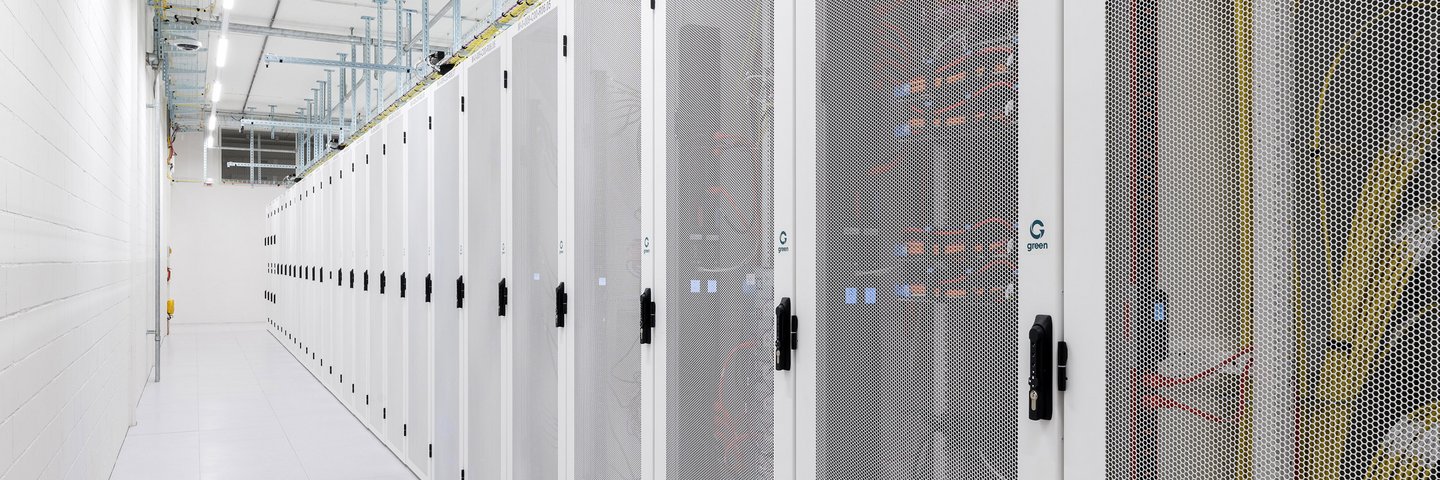
Chris Keller: It starts with an infrastructure foundation that very few on premises server rooms can match. Green operates four datacenters in the Zurich region, providing geographic redundancy, multilayer security, and around the clock operations.
Azure connectivity is delivered privately through Azure ExpressRoute, using a carrier neutral architecture without traversing the public internet. Data and operations remain in Switzerland and are governed by Swiss law.
For business critical applications, that combination of availability, secure connectivity, and local data residency makes all the difference.
Which organizations benefit the most?
Chris Keller: Organizations with demanding requirements for data residency and availability benefit the most. That includes financial institutions, healthcare providers, government agencies, operators of critical infrastructure, and manufacturers running data intensive production environments.
It also makes strong economic sense for predictable, consistently high workloads. Standard applications can run in the public cloud, while sensitive workloads remain with us in Switzerland.
Instead of moving data to AI, organizations bring AI to their data.
AI is on everyone's agenda. How does Green balance AI innovation with data protection?
Chris Keller: AI makes this challenge even more important because AI models need to be close to the data. Azure Local brings high performance GPUs into the local datacenter and performs AI processing where the data resides. Sensitive data never leaves Switzerland.
Green provides the infrastructure required to support these workloads, including high density computing environments and the advanced cooling they require. Instead of moving data to AI, organizations bring AI to their data.
Why choose Green instead of working directly with a hyperscaler or a local provider?
Chris Keller:
Because each delivers only part of the solution. Hyperscalers provide the platform, but not Swiss operations. Local providers offer proximity, but not the full Azure ecosystem.
Green brings these strengths together as Microsoft's preferred datacenter partner in Switzerland, combining highly available datacenters, high performance connectivity, and a neutral Green Ecosystem that connects customers with the right implementation partners.
The result is a solution that combines cloud innovation, local control, and reliable implementation, making Green the enabler of digital sovereignty in Switzerland.
![[Translate to Englisch:]](/fileadmin/_processed_/9/d/csm_Digitalisierung_Gesellschaft__2__da41db23e7.jpg "[Translate to Englisch:]")
![[Translate to Englisch:]](/fileadmin/_processed_/5/f/csm_AdobeStock_628395867_6ac5d92b01.jpeg "[Translate to Englisch:]")